How to Introduce Chastity to Your Partner (Without the Awkwardness)
Lead with why it appeals to you, not with the device. Pick a calm moment. Explain it simply and let them ask questions. Expect objections and answer them honestly rather than defensively. Suggest something small rather than a commitment. And if the answer is no, accept it, because pushing costs you more than the request was ever worth.
- Introduction
- Start with the why, not the device
- Create a low-pressure conversation
- What to actually say
- Explaining it without making it sound scary
- Their likely objections, and honest answers
- For the partner: what you are actually being asked
- If they say no
- Suggest a low-stakes trial
- Your first 30 days
- Keep checking in
- Frequently asked questions
- Final thoughts
Introduction
Talking about a fantasy can feel like standing at the edge of a cold pool. At Lockd, this is the question we get asked more than almost any other: not how a cage works, but how to bring it up in the first place. That is where most people freeze.
If you are reading this, you are probably curious about male chastity, or you have been quietly thinking about it for a while and have no idea how to say so without it landing badly.
The conversation is genuinely the hard part. The rest is logistics.
Back to top ↑Start with the Why, Not the Device
People connect with meaning, not mechanics. "I want to wear a cock cage" is a request about hardware. It gives your partner nothing to respond to except the object.
Work out your own reasons first, honestly, before you say anything. Is it the anticipation? The structure? The idea of handing over a decision? Wanting to slow down and be more deliberate about intimacy? Wanting your partner to have that kind of say?
Whatever it is, that is the thing worth saying out loud. The device is just how it happens.
Create a Low-Pressure Conversation

Timing matters more than wording. Choose a moment when you are both relaxed and neither of you is about to walk out the door.
Do not raise it mid-argument, mid-chore, or in bed. Bringing it up during sex in particular tends to backfire, because it turns a conversation into a request in the moment, when saying no is hardest.
Pick something ordinary and unhurried. After dinner. On a walk. In the car, where you are side by side rather than face to face, which a lot of people find easier for a difficult subject.
Back to top ↑What to Actually Say
You do not need a script, but having a first sentence ready stops you talking yourself out of it. Use whichever fits your relationship.
That last one is the most useful phrasing on this page. It separates telling from asking, which removes the pressure for both of you. Your partner can hear it without feeling they have to decide anything, and you can say it without it being an ultimatum.
Explaining It Without Making It Sound Scary
If your partner has never heard of chastity devices, their first thought will be metal, locks, and how long. Your job is to correct the picture, not oversell it.
Keep it short:
- One partner voluntarily hands over control of their own sexual release. That is the whole idea.
- It does not have to involve pain, punishment, or humiliation unless you both want it to.
- It can be an evening, a weekend, or occasional. It does not have to be permanent.
- It is consensual and can stop at any time.
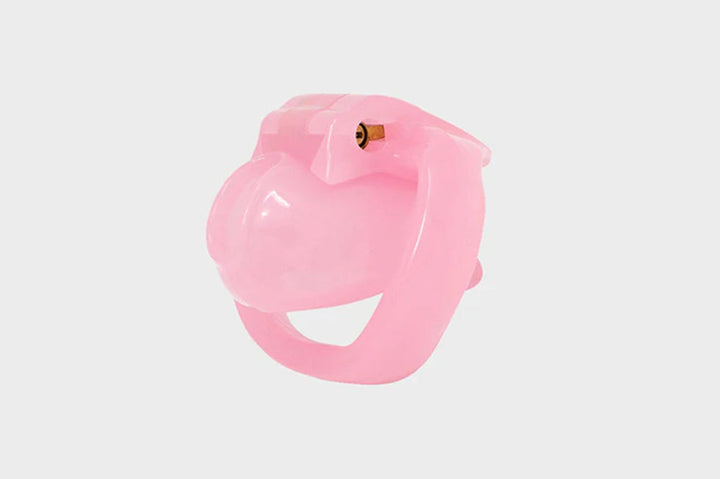
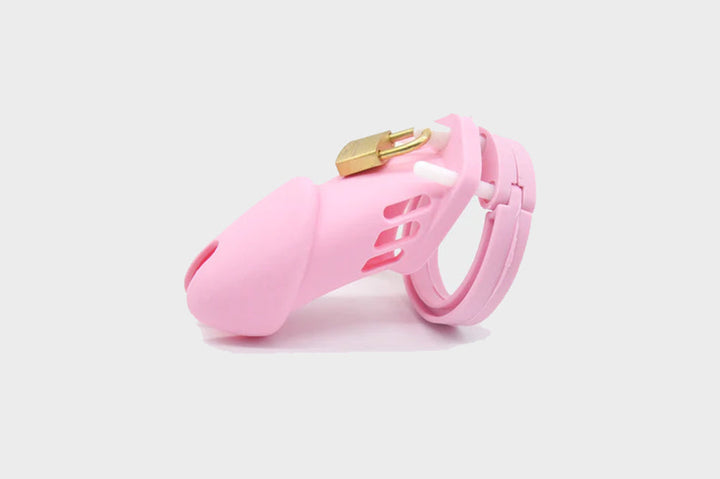
- Modern cages are made for comfort. Many are lightweight silicone or resin rather than steel.
If they want detail, our guide on what a chastity cage actually is is a straightforward read for someone starting from zero, and the glossary covers the terminology without assuming anything.
Back to top ↑Their Likely Objections, and Honest Answers
Most first conversations run into the same five reactions. Answering them plainly works better than reassuring around them.
"Am I not enough for you?"
The most common one, and the one that hurts most. The honest answer is that this is not about dissatisfaction. Wanting to hand over control is a desire for more involvement from them, not less interest in them. Say that directly rather than just denying the premise.
"Is this a control thing? Do you want me to be your dominatrix?"
Only if you both want that. Plenty of couples do chastity with no D/s dynamic at all, just anticipation and a locked device. If you do want that dynamic, be honest about it now, because discovering it later feels like a bait and switch.
"So does this mean we stop having sex?"
No, and this misconception ends more conversations than any other. Chastity restricts one partner's orgasm. It does not restrict intimacy, and for many couples it increases the amount of non-penetrative attention considerably. Make that clear early.
"Isn't this weird?"
It is a niche interest. It is also common enough to have a large community, a month-long annual event, and an entire retail industry. Weird and uncommon are not the same thing, and neither is an argument against something you both consent to.
"What if someone finds out?"
A legitimate practical worry rather than a rejection. Cages are worn under clothing and are not visible. Deliveries and billing from reputable retailers are discreet. Storage is the only real consideration, and it is solvable.
Back to top ↑For the Partner: What You Are Actually Being Asked
If your partner has just shown you this page, this part is for you.
Someone has told you they are interested in chastity. You may be curious, uncomfortable, or entirely thrown. All of those are reasonable.
What you are being asked for: your partner wants to hand you control over when they orgasm. Practically, that means they wear a device they cannot remove, and you decide when it comes off. That is the entire mechanic.
What you are not being asked for: you do not have to become a dominatrix, learn a scene vocabulary, punish anyone, or change your personality. You do not have to give up sex or stop initiating. You do not have to enforce anything you are not comfortable enforcing.
You are allowed to say no. You are also allowed to say "not now," "not that part," or "I want to think about it for a month." None of those are rejections of your partner, and a good partner will accept any of them without sulking.
Fair questions to ask: How long have you felt this way? What appeals to you about it? What would you want me to actually do? What happens if I hate it? Can we stop whenever I want?
If you want to know more before deciding anything, what is a chastity cage explains it without assuming any prior interest.
If They Say No
Almost every guide on this subject stops at how to raise it. This is the part that actually needs saying.
A no is an answer, not an opening position. If your partner says they are not interested, the conversation is finished for now. Repeating the request, leaving articles open on their laptop, or bringing it up again in three weeks with a slightly different angle is pressure, and they will experience it as pressure even if you do not intend it that way.
Distinguish a no from a not yet. "I don't want this" and "I don't understand this yet" sound similar in the moment. It is fair to ask once, gently, which one it was. It is not fair to keep asking until you get the answer you want.
Thank them anyway. They listened to something difficult. That is worth acknowledging regardless of the answer.
What you have gained even from a no: they now know something true about you that they did not know before. That is not nothing, and for a lot of couples it opens other conversations that had been stuck.
Suggest a Low-Stakes Trial
If they are curious but hesitant, do not propose a month. Propose an evening.
- An hour or two, at home, with the key on the table rather than hidden.
- Try the psychological side with no device at all first: they decide, you ask.
- Let them handle the cage and see what it actually is. It is smaller and lighter than most people picture.
- Shop for one together. Choosing it jointly turns it into a shared project rather than your request.
- Frame it as an experiment with an end date, not a commitment.
Our readiness quiz is a low-pressure way to talk about it, since answering questions together is easier than one person making a case.
Back to top ↑Your First 30 Days
If they say yes, resist the urge to go straight to permanent lockup. This is the pace that works.
| When | What to do |
|---|---|
| Week 1 | Choose and order a cage together. Measure properly using our measuring guide. Talk about rules while you wait, with no device in the house yet. |
| Week 2 | First wears, unlocked, an hour or two at a time. Get the fit right before anything is locked. Agree a safe word and an emergency key plan. |
| Week 3 | First locked session, an evening or overnight. Debrief afterwards, honestly, both of you. |
| Week 4 | A weekend if it is going well. Agree what happens next, together, rather than assuming it escalates. |
Keep Checking In
Chastity runs on communication more than on hardware. If your partner agrees to try, make debriefs a habit rather than something that only happens when there is a problem.
- How did that feel emotionally, not just physically?
- What did you actually enjoy?
- What felt awkward, silly, or uncomfortable?
- What would you change next time?
- Is there anything you have been reluctant to say?
Do these outside the dynamic, dressed, in a normal conversation. Feedback given during a scene is rarely the honest version.
Back to top ↑Frequently Asked Questions
How do I bring up chastity with my partner for the first time?
Choose a relaxed, private moment when neither of you is rushed, and lead with why it appeals to you rather than with the device. A simple opener works best: tell them there is something you have been curious about and ask if you can explain it. Framing it as sharing a fantasy rather than making a request removes the pressure to decide on the spot.
What if my partner reacts badly?
Give them time rather than defending your position. An initial negative reaction is often surprise rather than rejection, and many people need days to process something unexpected about their partner. Do not raise it again immediately. Let them come back to it.
What if my partner says no to chastity?
Accept it. A no is an answer, not a starting offer, and repeating the request in different forms is pressure regardless of intent. You can ask once whether it is a no or a not yet. Beyond that, continuing to push damages trust more than the fantasy is worth.
Does chastity mean we stop having sex?
No. Chastity restricts one partner's orgasm, not the couple's intimacy. Many couples find that non-penetrative intimacy increases, because attention shifts away from a single outcome. This is the most common misconception and worth clearing up early in the conversation.
Does my partner have to be dominant for chastity to work?
No. Plenty of couples practise chastity with no power exchange at all, treating it as anticipation and shared control rather than a D/s dynamic. If you do want a dominant dynamic, say so at the start rather than introducing it later.
How long should our first chastity session be?
Start with an hour or two, at home, with the key accessible. Build to an overnight, then a weekend. The person who was more hesitant should set the pace, and there is no benefit to rushing to long-term wear.
Should we buy a chastity cage together?
Yes, if your partner is willing. Choosing it jointly turns chastity into a shared project rather than one person's request, and it gives the hesitant partner practical involvement and a sense of control over the process.
Back to top ↑Final Thoughts
Introducing chastity is not really about presenting a device. It is about saying something true about yourself and giving your partner room to respond honestly.
Done with care, it becomes a conversation about trust rather than a negotiation about hardware. Done badly, it becomes a thing your partner agrees to in order to end the discussion, which serves nobody.
If you both decide to try it, Lockd stocks beginner-friendly cages in comfortable, body-safe materials, and our guide to choosing a cage is a good thing to read together.
Back to top ↑