How To Choose The Perfect Chastity Cage
TL;DR
Choosing a chastity cage comes down to four decisions: material, length, how open the design is, and who you buy from.
Silicone and resin are lightweight, forgiving and the sensible first cage.
Steel gives maximum security and psychological weight, and suits people who already know their size.
Short cages restrict erections completely; longer cages allow a little growth.
Open designs breathe better and are easier to clean while locked; closed designs are stricter.
Pro tip: start with silicone or resin, then move to steel once you know what fits you.
Why Choosing the Right Cage Matters
You are thinking about buying your first chastity cage but you are not sure what style you want. You understand how they work, the games you can play with them, and what they can bring to a relationship's power dynamics. What you are still weighing up is whether to go for steel or resin, short or long, open or enclosed. There are aesthetic choices to make here as well as practical ones.
Get it wrong and the cage sits in a drawer. At Lockd, the most common reason a first cage gets abandoned is not that someone lost interest, it is that they bought a device that never fitted properly. So it is worth spending twenty minutes on this before you spend money.
Let's take the four main decisions in order.
Quick Pick: Which Cage for Which Person
If you want the short version before the detail:
| If you are... | Start with |
|---|---|
| Buying your first cage and unsure of your size | Silicone. Forgiving, soft, and the least punishing to get wrong. |
| Planning long term or 24/7 wear | Cobra resin or Holy Trainer. Light enough to forget about. |
| After maximum security and psychological weight | Steel. Heavier, stricter, and best once you know your size. |
| Travelling, or wearing under close-fitting clothes | A short resin or silicone cage. Discreet and no metal detectors. |
| Completely new and want the safest starting point | Our beginner collection, which is filtered for exactly this. |
1. Silicone and Resin vs Metal
The first choice is material. Broadly this splits into stainless steel on one side, and silicone and resin on the other. We group resin and plastic cages with silicone here because they share the characteristic that matters most day to day: they are light.
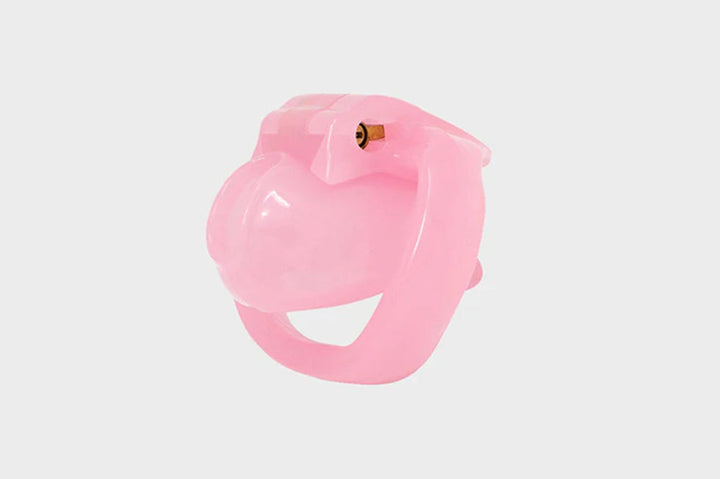
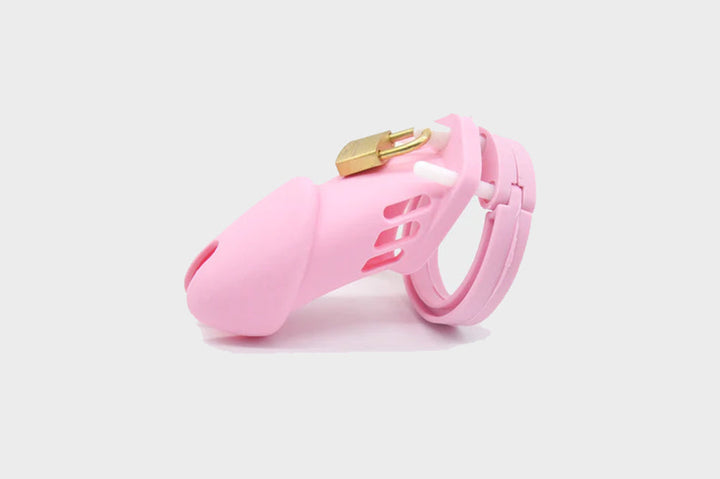
Most people starting out gravitate towards silicone chastity cages, partly because they feel less severe than steel. Older plastic cages had a reputation for cracking and softer silicone for tearing, but the materials have improved considerably. Modern body-safe silicone and resin are more comfortable, more durable, and have allowed designs that were not previously possible, including the Cobra range and the Holy Trainer V4 and V5. These are secure devices, not compromises.
Stainless steel cages have an appeal the other materials cannot match. There is something more raw about being locked into steel, knowing it is effectively indestructible. Cold metal against sensitive skin reinforces the control dynamic in a way resin does not. You will feel the weight, and that weight becomes a constant reminder as you go about an ordinary day.
The practical trade-off: steel is heavier to sleep in, goes cold, and sets off airport metal detectors. Resin and silicone do none of those things but offer less of the psychological heft.
Silicone vs metal: which suits you
| Feature | Silicone / resin | Steel |
|---|---|---|
| Comfort | High. Soft and lightweight. | Medium. Heavier and rigid. |
| Security | Moderate to high | Maximum |
| Discretion | Very discreet, no metal detectors | Less discreet |
| Sleeping in it | Easier | Takes adjustment |
| Best for | Beginners and daily wear | Experienced wearers and strict play |
For a fuller breakdown of how each material behaves over weeks rather than hours, see our material comparison guide.
Back to top ↑2. Short vs Long Cages
Cage length comes down to a single question: do you want to be able to get slightly aroused while caged, or do you want the cage to prevent it entirely?
Both work, and the right answer depends on how you or your partner frame the dynamic. Do you want chastity to mean complete control of arousal, or do you want to allow a little growth and the frustration that comes with it?
Both are comfortable if not taken to extremes. A cage the same length as your flaccid penis, or slightly shorter, holds everything neatly in place with mild compression. Only when you go substantially shorter does that become uncomfortable. A cage longer than your flaccid length leaves a gap, allows a little forward growth, and you will fill it quickly. Go too long and you get excess movement inside the cage, which causes its own problems.
Length also affects daily wear. Consider what you actually wear. A longer cage under close-fitting trousers is more noticeable than a short one.

Short vs long: which style fits you
| Feature | Short cage | Long cage |
|---|---|---|
| Erection control | Complete restriction | Allows slight growth |
| Comfort | Medium. More compression. | High. Less compression. |
| Discretion under clothing | Highly discreet | Slightly noticeable |
| Best for | Strict control | Milder chastity play |
3. Closed vs Open Designs
How open a cage is changes both daily wear and play. Open designs use spaced bars, leaving parts of you exposed. That means breathability, and it means you can feel things through the gaps. Closed designs are fully enclosed, so nothing is exposed unless your keyholder allows it.
In ordinary daily wear, an open cage means you feel fabric moving against skin, and you will be more sensitive while locked. For some that is pleasant, for others it is too much, which some keyholders regard as the point. A closed cage means you feel nothing but the device itself. It is strict, it is comfortable enough for daily wear, but you cannot adjust yourself inside it, and it is less breathable and runs warmer.
For play, open cages allow a partner to provide stimulation through the gaps, along with easier urination and airflow. That also opens the door to overstimulation on an already sensitive locked penis. A closed cage removes that possibility entirely, which is what a stricter keyholder is usually after.
Open vs closed: which one to choose
| Feature | Open cage | Closed cage |
|---|---|---|
| Breathability | High | Low |
| Sensation | High | Low |
| Stimulation possible | Yes | Minimal |
| Cleaning while locked | Easier | Requires more care |
4. Choosing a Reputable Seller
There are plenty of good chastity retailers, and more every year as the category has grown. Price broadly tracks the split between made-to-measure and off-the-shelf devices.
Off-the-shelf is the right answer for about ninety percent of buyers. At Lockd we have curated our range with long-standing suppliers, quality tested it, and shipped to more than 25,000 customers worldwide. The thing we would caution against is the cheapest end of the marketplace listings, which tend to be more brittle, less consistently sized, and occasionally finished badly enough to cause injury.
For the remaining ten percent considering a custom device, it gets interesting if your budget allows. There are not many makers at that level, but Steelwerks is something of a legend in the chastity world for genuinely remarkable custom work.
What to actually check before buying anywhere:
- Does the listing state materials specifically, or just say "body safe"?
- Is there a size chart with real measurements, not just S/M/L?
- Are multiple ring sizes included, or sold separately?
- Is there a returns or exchange policy for sizing? This matters more than anything else on a first purchase.
- Does the seller answer questions about fit before you buy?
Choosing Your First Chastity Cage
If this is your first purchase, the priorities are different from someone replacing a cage they already know they like.
Prioritise forgiveness over ambition. Your first cage will probably not be the one you settle on, and that is normal rather than a failure. Almost nobody gets the ring size right first time. Choose something that will still be usable if your measurement is slightly off, which means silicone or resin rather than steel, and a moderate length rather than the shortest available.
Buy multiple ring sizes if you can. Many beginner sets include three or four rings. This is the single most useful thing you can do, because the ring is what decides comfort and it is the part you are most likely to get wrong.
Do not start with a fully enclosed cage. Cleaning while locked is much harder, and hygiene problems are the most common reason a first lockup ends early.
Skip the extras. Spikes, urethral inserts, and electronic locks are all interesting later. On a first cage they add variables you cannot yet judge.
Our beginner chastity cage collection is filtered on exactly these criteria, and the readiness quiz is a quick way to sanity-check whether you want daily wear or occasional play before you buy for the wrong one.
Back to top ↑Pro Tips for First-Time Buyers
- Measure your flaccid length and base girth before buying. Our measuring guide walks through it properly.
- For long-term wear, prioritise comfort and hygiene over how a cage looks.
- Avoid the cheapest listings. Poor build quality is the most common cause of injury.
- Start with short wear times and build up. It lets your body adjust and prevents irritation.
- Keep a spare key somewhere accessible. This is a safety measure, not a loophole.
- Clean the cage and yourself daily. Mild soap and warm water is all that is needed.
- Choose a breathable design for airflow, which reduces sweat and skin problems.
- Check any new cage for sharp edges or rough spots before wearing it, and smooth them with fine sandpaper.
- If you are playing with a partner, agree safe words and boundaries first. Our guide on introducing chastity to a partner covers that conversation.
- Never force a ring that feels too tight. Discomfort is a warning sign, not something to push through.
Frequently Asked Questions
A lightweight silicone or resin cage in a moderate length, ideally one that ships with several ring sizes. Beginners should prioritise forgiveness over strictness, because almost nobody gets their ring size right on the first attempt. Avoid steel, very short cages, and fully enclosed designs until you know what fits you.
A chastity cage fits around the penis only and is held in place by a base ring behind the testicles. A chastity belt adds a waist band and crotch strap for fuller coverage and greater security, and is considerably less discreet under clothing.
Silicone and resin are lighter, more comfortable for long wear, and more forgiving if your sizing is slightly off, which makes them the sensible first cage. Steel offers maximum security and a psychological weight the others cannot match, but it is heavier to sleep in and will trigger airport metal detectors. Most people start with resin or silicone and move to steel later.
A short cage prevents erections entirely and is more discreet under clothing. A longer cage allows slight growth and the frustration that comes with it. Choose based on whether you want complete control of arousal or partial. A cage roughly the same length as your flaccid penis, or slightly shorter, is the most comfortable starting point.
Open designs with spaced bars breathe better, allow sensation through the gaps, and are much easier to clean while locked, which makes them better for long-term wear. Closed designs are stricter, prevent any stimulation, and suit stricter keyholder dynamics, but they run warmer and need more careful hygiene.
Sizing is a separate exercise from choosing a style. You need your flaccid length for the cage and your scrotal circumference for the base ring. Our measuring guide and ring size guide cover the method in full, and the ring is the part that decides comfort, so it is worth measuring twice.
Yes, with the correct size, daily cleaning and regular checks. Remove the device immediately if you notice numbness, discolouration, swelling or any break in the skin. Persistent irritation despite a good hygiene routine usually indicates a fit problem rather than a hygiene one.
Yes, provided the fit is correct and nothing restricts blood flow. Lighter resin and silicone cages are easier to sleep in than steel. Sleep on your side with knees bent to reduce pressure during nighttime erections, and remove the device if pain persists.
Low-impact activity such as walking, yoga and light cardio is generally fine. Avoid heavy lifting, contact sports and cycling until you are confident in the fit, as movement can cause chafing. A curved base ring adds stability for anyone active.
Final Thoughts
Four decisions, in order: material, length, how open the design is, and who you buy from. Get those right and the cage becomes something you stop noticing, which is the goal.
If you are still unsure, start light. A forgiving silicone or resin cage in a moderate length teaches you more about what you actually want than any guide can, and it costs less to be wrong about.
Browse the beginner range, the Cobra resin cages, or the full steel collection when you are ready.
Back to top ↑